
Free vs paid face swap plans: what each tier really costs
Short answer: a free face swap plan is enough for casual photo edits and the odd watermark-free meme, but the moment you want clean HD video at any regular volume, paying becomes the honest choice. Free apps cost $0; paid plans run roughly $5 to $30 a month, a range brandignity puts on the category. The catch is that most pricing pages compare badly, because every tool measures usage in its own credit unit. Normalize each one to a single job, say a 2-minute video, and the real winner shifts.
Prices, quotas and credit formulas in this comparison are a snapshot verified at publication time. They drift without notice, so confirm anything load-bearing on the official pricing page before you pay.
Free trial vs freemium vs true free tier: what 'free' actually means
The word free hides three different billing models, and reading a pricing page correctly starts with telling them apart. A free trial hands you a one-time batch of credits or a short window, then the paywall closes. It is a demo, not a plan you can live on. Freemium is different: you keep ongoing access to a limited slice of features for as long as you like, with the better stuff reserved for paying users.
And then there is the genuinely unlimited free tier, which barely exists in video face swap. Inference is expensive, so no serious tool gives away unlimited rendering. The pattern holds across the market, as wavespeed notes when it splits trial, freemium and true free into separate categories.
- Free trial: a one-time credit grant or a countdown before the paywall, built to convert you, not to sustain you.
- Freemium gives you indefinite access to a capped feature set, which is what most 'free' face swap tools actually offer.
- A true unlimited free tier is rare for video, because each rendered second costs the provider real compute.
What you actually lose on the free plan
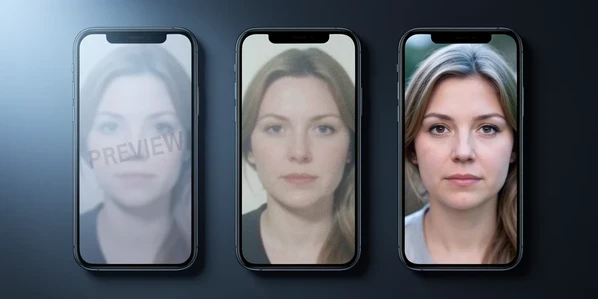
Free tiers are differentiated almost entirely by three things, and paying buys all three back. Watermarks stay stamped on free output and lift only on paid plans. Export resolution is commonly capped at 576p or lower. And a daily ceiling of roughly two to five short clips keeps casual use casual. Those three gotchas, flagged by wavespeed, explain most of the frustration people feel with 'free' tools.
A few tiers break the mold. AIFaceSwap.io produces watermark-free photos and videos on its free tier, yet exports only in standard definition, so the clip is clean but soft. JAI Portal goes further: 10 free credits on signup, no credit card, no watermark, and commercial use allowed. That last point is unusual, since most free output is licensed for personal use only.
How credit-based pricing translates into real usage
Most paid tools run on credits. You pay a subscription, and every edit subtracts a set number of credits depending on the feature, a model fritz describes for Deepswap. The trap is that a credit balance tells you nothing until you know how fast a given job spends it.
Image swaps are the cheap part. They are often free or a single credit. Video is where the meter spins, because credits drain per second or per segment of footage. Three real formulas show how far apart the units sit:
- aifacesswap.com bills video at (faces + 1) x seconds in credits, so a one-face clip costs two credits for every second.
- FaceSwap AI Pro charges 10 credits per 10 seconds.
- An autoppt example runs leaner at 1 credit per 15 seconds, but gates video behind a $34.99/month Ultra tier.
Same task, wildly different math. Multiply your typical clip length by the per-second rate before you choose a tier, not after the credits vanish.
Side-by-side: free tier and paid plans across the major tools
Here is each tool normalized to the same columns: what the free quota gives you, what a paid plan costs, and what video or HD unlocks. Figures come from each tool's own pricing page or a sourced review, cited in the sections above.
| Tool | Free tier | Paid pricing | Notes on video / HD |
|---|---|---|---|
| Deepswap | None (no free plan or trial) | $9.99/mo (20 credits) or $49.99/yr (240 credits) | Credit-based; annual renews at $99.99 after year one |
| FaceSwap AI | Basic use, no signup needed | Basic $9.99/100 credits, Pro $19.99/300, Premium $49.99/1000 | Pro video swap at 10 credits per 10 seconds |
| aifacesswap.com | $0: 50 credits/mo, 10MB upload, 3-day retention | Pro $12.99/mo (800 credits, 20MB, 30-day) or $99/yr | Image swaps free; video = (faces + 1) x seconds |
| VidMage | 15 image, 20s video, 2 GIF swaps per day | $14.99/mo (400 credits) or $8.33/mo billed yearly | Daily free video capped at 20 seconds |
| FaceFusion | Free to try basic swaps | Packs from $13/100 to $499/5000 credits | More credits and higher limits need a paid pack |
| DeepFaceLab | Free, open-source, no quotas | $0 | Highest quality, but needs a capable GPU and setup |
Two outliers worth naming. DeepFaceLab is genuinely free with no quotas because it runs on your own hardware, the route wavespeed flags for technical users willing to manage a GPU. FaceSwap AI deletes processed images after 24 hours, and Deepswap, by contrast, offers no free door in at all.
Hidden costs: renewal jumps, expiring credits, and commercial-use limits
The sticker price is rarely the real price. Deepswap's annual plan looks like a bargain at $49.99 for 240 credits, until it renews. The price doubles to $99.99 in the second year, a jump fritz.ai documents and most buyers never see coming. A cheap annual plan does not stay cheap by default.
Credit expiry is the next quiet cost. On aifacesswap.com, free monthly credits reset every month, meaning anything unspent is simply gone, while purchased credits never expire. Those two pools behave nothing alike, so timing your video work to the reset matters if you live on the free tier.
Then there is licensing. Many free tiers are personal-use only, which quietly rules them out for anyone selling content. JAI Portal is the rare exception that allows commercial use on its free credits, a line in its terms worth more than it looks for working creators.
Worked example: pricing one 2-minute video across tools
Take one concrete job, a single-face clip of 120 seconds, and run it through each tool's own formula. This is the comparison the pricing pages refuse to do for you.
- FaceSwap AI Pro at 10 credits per 10 seconds: that single clip eats 120 credits, so the 300-credit monthly Pro pool is gone after roughly two and a half such videos.
- aifacesswap.com at (1 + 1) x 120 = 240 credits per clip, which blows straight past the 50-credit free tier and consumes nearly a third of the 800-credit Pro pool in one go.
- An autoppt-style 1 credit per 15 seconds works out to just 8 credits for the same 120 seconds, with packs from $19.99 for 20 credits, far gentler per job.
Now the budget walkthrough. Picture a creator posting one short clip a day on aifacesswap.com's free tier. At 50 credits a month, a single 25-second one-face video (50 credits) empties the whole allowance on day one. The free pool is built for photos, not a daily video habit, and that is exactly the moment the upgrade decision lands mid-project.
A higher headline price can be the cheaper choice per finished job, if its credit pool matches your real video volume. The smallest plan is not automatically the frugal one.
When free is enough vs when paying is justified
Match the plan to how you actually work. Casual and meme use rarely needs a wallet at all: JAI Portal hands over watermark-free, commercially usable output on its free credits, and AIFaceSwap.io gives clean standard-definition clips for nothing. Soft resolution is fine for a group chat. It is not fine for a portfolio.
Creators who need watermark-free HD and post video regularly should do the credit math first, then price a subscription against that monthly volume rather than the headline number. If you only swap faces now and then, a pay-as-you-go pack from JAI Portal or FaceFusion usually beats a subscription, since unused monthly credits typically do not roll over.
And if you have a capable GPU and the patience to set it up, DeepFaceLab or a local FaceFusion install runs free with no quotas and the highest quality on offer. The cost there is your time and hardware, not a monthly bill. Free apps sit at $0; paid plans land in that $5 to $30 band. Which is right comes down to one question: how much video, how often?